

Empowerment after sexual molestation
Introduction
Sexual abuse or child abuse is the term used when a child is being exploited for sexual gratification. It can involve several activities, from a person who exposes themselves to a child to inappropriate touching, even rape.
Statistics certainly do not reflect the extent of this crime since it is buried in secrecy.
The 2019/2020 Annual Crime Statistics presented by the South African Police Service (SAPS) early 2024 showed that more than 24 000 children were sexually assaulted in South Africa during that period. One in five children are victims of sexual abuse, representing 19.8%, compared to a global average of 18% for girls and 8% for boys.
For more information/insight, you can read the full article at:
– Rape, childhood sexual abuse continue to plague SA – Health-e News (Rape, childhood sexual abuse continues to plague SA – Health-e News), and
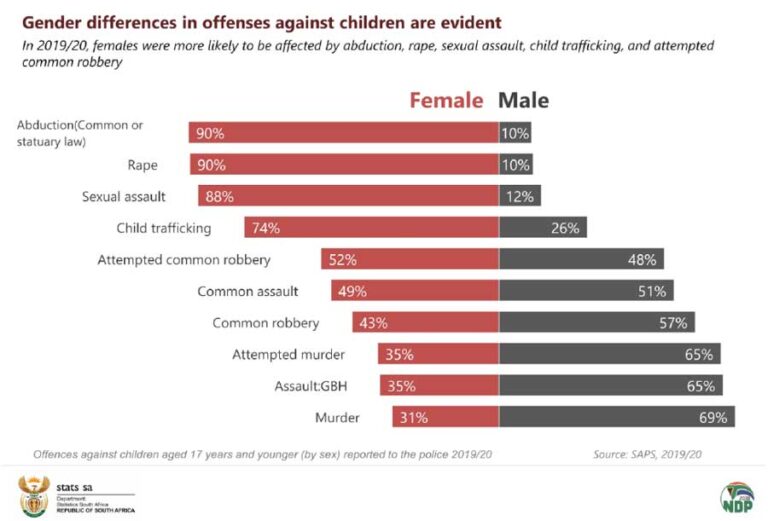
Most people find it hard to accept that child abuse happens at all. Child abuse is common, and it occurs in all social classes and all communities and is not limited to any racial or economic group.
Seek help should you experience any of the following:
- suicidal thoughts;
- self-inflicted injuries or the urge to hurt yourself;
- severe nightmares, daydreams, and upsetting flashbacks;
- irresponsible behaviour;
- a depressive mood or a history of depression.
You were sexually abused if:
- someone has had any form of sexual interaction with you without your consent and when you were not emotionally ready;
- you were touched in a sexual manner;
- you were exposed to pornographic books or movies or if you had to listen to conversations of a sexual nature;
- someone sexually exposed themselves to you;
- someone was washing or bathing you in a way that made you feel uncomfortable;
- you were held or cuddled in a way that made you feel uncomfortable or insecure;
- any form of oral sex was forcefully expected of you;
- anyone came into your room or bathroom, without your consent, whilst you were undressing;
- anyone made obscene or suggestive comments or threats towards you.
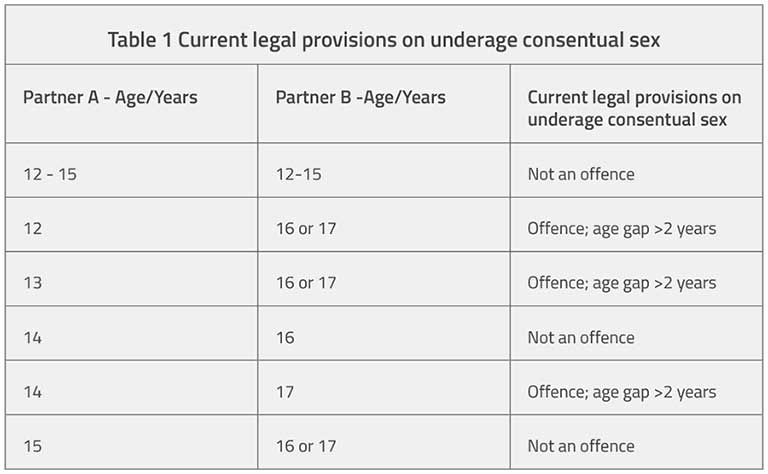
It boils down to this: if anyone older than you, whether of the same or opposite sex, practiced any act of a sexual nature with you before you turned 16 years of age, (whether there was full penetration involved or just touching above your clothes in the areas where your underwear should be), you were sexually abused. You will experience exactly the same side effects, as I will discuss in this document.
Consequences of abuse
Every child is unique, and the consequences of abuse vary from person to person. However, if the child does not receive appropriate treatment, sexual abuse may likely cause serious short- and long-term psychological consequences. Four main factors explain the psychological effects of sexual abuse on children:
Traumatic sexualising
The child may develop misconceptions about sexual behaviour. Sexuality can be associated with fear, negative emotions, and memories. The child may feel that the only way to receive tenderness, love, acceptance, and attention, is by sexual behaviour. Consequently, the person may show excessive sexual behaviour or may avoid any sexual activity at all. Adults who were sexually abused as children, often have problematic relationships, as well as problems in their sex lives.
Sexual stigmatisation
Sexual abuse stigmatises the child because the abuser blames and ridicules the child, and the child is forced to keep the secret. If the abuse comes to light the child may be blamed. Consequently, the child feels ashamed and guilty and may develop a negative image of themselves that may cause depression, anxiety, eating disorders, dysfunctional relationships, and avoidance behaviour. Amongst others, they may also experience a tendency to injure themselves, substance abuse, or even suicide.
Feelings of betrayal
The sexually abused child experiences betrayal, more often than not by the people who were actually supposed to protect them. The initial betrayal by the abuser is often confirmed and aggravated by the treachery of other adults who blame the child or refuse to protect them when the abuse comes to light. This betrayal may cause a loss of trust in others, feelings of sadness, intense anger, and possible revenge fantasies. Such people find it difficult to trust others, even in adulthood.
Feelings of helplessness
Children subjected to sexual abuse may feel deeply helpless since they could not prevent nor avoid it. The child may generalise this experience of helplessness and develop a feeling of general helplessness, which can cause depression and anxiety.
Challenges of adult survivors:
- unwanted and involuntary memories of the abuse, whether it be thoughts, feelings, nightmares, or flashbacks;
- challenges with self-esteem and self-respect;
- difficulty in having satisfying and mutual trust in relationships (they often engage in dysfunctional or abusive relationships);
- a dead-like feeling and a feeling of being cut off from others and in a sense from themselves;
- sexual problems;
- substance abuse;
- eating disorders (obesity, anorexia or bulimia);
- depression;
- self-harm.
Victims of sexual abuse may more than often develop Post-traumatic Stress Disorder (PTSD) which can be found on my website.
Other consequences victims may experience:
Guilt
There is a controversial but valid statement that states: apart from physical pain and moral problems, molestation otherwise is quite a pleasant experience. Thinking about it – molestation is sex and sex is a pleasant experience. This is how we as human beings are wired. There is physical pleasure present. Molestation amongst many, may also cause some pleasant associations.
The abuser may say and do things like:
– it’s our secret;
– I do it because I love you;
– Showering the child with gifts or sweets to prevent them from speaking out.
– I’m doing so much for you- surely you can help me with this?
- Surely you must have enjoyed it too?
- Do you like it when I do this, or that or do you prefer this or that instead?
Self-blame
Feelings of guilt go hand in hand with a negative self-image and efforts to try to compensate for what they did wrong. The victim may be blaming themselves, asking questions such as:
– why did I not stop it?
– why me?
– what’s wrong with me that this happened to me?
– do I deserve to be treated like this?
– Did I provoke him?
The molested often tries to compensate by meeting other people’s needs in order to please them. They may keep on getting abused by people and keep on remaining the victim even throughout their lives. They have not learned to say no and they haven’t realised that they are survivors. They often feel powerless and helpless and accept that it is their destiny in life and that they cannot change anything.
The molested, as adults often tend to blame the little child they were long ago with the thoughts and insights of an adult. You were, however, just a child who did not have the control, knowledge, experience, and mature thoughts you have today. You were just a child, and a child was not supposed to say no to adults who were supposed to know better. As a child, you did not realise what was happening to you. You knew something was wrong somehow, but adults cannot be wrong.
Shame
Victims of molestation often think:
– I feel so dirty, so abused. I do not know how my husband can love me.
– I cannot live with the fact that I participated in something like this.
– I shudder now when I think about it.
Shame and a sense of disgrace go hand in hand with feelings of guilt. These feelings are deeply rooted in the subconscious where they can control the victim’s entire life. The feelings of guilt are, however not logical, and rational arguments cannot necessarily prove your guilt. You may understand that there is no need to feel like this but despite all your efforts to convince yourself otherwise, but these feelings keep on eating away at you.
Low self-esteem
Low self-esteem may develop from the negative messages the victim receives from the abuser which will reinforce the negative messages the victims give themselves as a result. These messages may include the following:
– I am bad and dirty;
– Sex is all I’m good for;
– I do not deserve to be treated properly or with respect;
– I have no right to say no;
– I have always felt stupid and felt I have underperformed;
– I’ve always felt worthless as if there is nothing I can do well;
– I have never had confidence even though I tried hard to be perfect;
– I feel like a failure;
– I feel like a victim;
– I’m a nobody;
– I hate myself;
– I have a constant fear of being rejected;
– I feel inferior;
– I try to be perfect without success;
– I will be better and I can do better;
– I am overly sensitive.
These negative thought patterns are fed by repetitive negative thoughts that eventually become a habit that cannot be changed just by logical arguments or affirmations. These lies remain your reality.
Over- or under-achievement
Victims of molestation mainly exhibit two types of behavioural patterns:
– Some survivors of sexual abuse are underachievers. They take a stance that they are losers in life, not even trying and denigrate themselves and accepting in advance that they will never be successful at anything.
– other survivors are the perfectionists who feel they have to prove themselves at all costs in a desperate attempt to keep on standing out. They idealise success and pursue it. I have to do everything perfect to be accepted, to prove that I’m all right and good enough, is the subconscious motive for their actions. They are hard on themselves and feel unworthy if they don’t meet the perfect standards. Their success, however, does not satisfy them. The harder they try to put their inferiority feelings away, the more they elude satisfaction, they mostly never experience.
Loss of childhood
Childhood is supposed to be carefree and the best years of your life. Children should be happy, and carefree in a safe environment. The abused child’s carefree childhood was brutally disrupted by trauma they did not ask for or deserve. Since they have learned to suppress memories, large chunks of their childhood often (sometimes mercifully) are just wiped out. They literally discard the baby along with the bathwater, suggesting that in their effort to erase the negative, they inadvertently erase the positive with the negative. They may remember certain periods of their lives, but sadly also forget certain parts of their life.
The effect of lies
The abused child often has a limited perspective on the world which is the result of having received false and distorted messages about the very basic facts of life – aspects such as power, control, intimacy, sex, love, trust, respect, and what it means to be a human. They may accept these lies for life, even when reality proves the opposite. They may bear life-long lies such as:
– the only thing a man wants from a woman is sex;
– people are unreliable;
– what is love? There is no such thing;
– you have no purpose in life other than being used;
– you cannot do anything about your destiny. You should just accept it.
Emotional confusion
Most victims of molestation often find themselves in a state of disassociation as a defence mechanism against emotional pain. They will often report that they feel cut off, and the events are being experienced as unreal as if it is happening to someone else as if they were mere spectators.
They might even forget that it happened, but the flashbacks keep on returning. It might become a pattern and the abused child eventually loses touch with their own feelings. They do not know exactly what they are feeling and eventually become emotionally confused. They often ignore their feelings and talk about their feelings with difficulty, if at all. In some cases, a pattern of numbing starts to emerge.
An abused child may also start to distrust their own feelings since these feelings are so often associated with pain that they learn not only to suppress painful feelings but also many other feelings, positive or negative.
Survivors of sexual abuse often lose their spontaneity and hide behind a mask of aloofness. Feelings can also be relegated to suppression by the abuse of alcohol and drugs, overeating, or excessive involvement in activities such as sports, work, and studies – anything to draw attention away from painful emotions or to prove to themselves and others that they are good enough for more than just sex and abuse.
Emotional confusion is furthermore a direct result of abuse. The abused may act emotionally inappropriately. They laugh when they are supposed to be sad, get angry about things that are actually funny and shouldn’t be taken seriously. They may have tantrums, are unpredictable and their emotions vary constantly. They could potentially supress or block their emotions and retreat into their protective shell.
It is not easy to describe exactly what this emotional turmoil involves, but here are some examples:
– I have always ignored my feelings as if they were separate from me as if it was not part of me;
– my feelings as a child were betrayed. I felt guilty but then the molester said everyone was doing it.
– I was angry but did not show it. I was scared, but he said there was nothing to be afraid of. What he did to me was bad, but he tried to convince me that other girls enjoyed it;
– he said he does it because he loves me, but is that what love means? No wonder I do not know what I’m supposed to feel.
– The victim, even as an adult, may still feel like a victim – they may experience problems expressing their anger appropriately in situations where it is justified. Some abused people quell their anger to such an extent that they are not able to recognise it as anger. Many survivors are under the impression that they have processed their anger and that it no longer bothers them. They understand consciously that the abuser has a problem. However, subconsciously they can feel the intensity of their emotions, not always understanding where it is coming from.
Intimacy and sexuality
The sexual and intimate life of the abused may be severely and negatively affected. Molestation is sex per se, and the child gets a complete misconception of sexuality. They start to confuse sex with love and acceptance. Their constant search for love and the confusion thereof causes them to keep on getting abused even into adulthood. The more they search for love and the more they are getting used, the more the idea that they are not good enough, rejected, only good for sex, etc. gets enhanced.
You may experience one or both of the following in sequence or alternating, in adulthood:
– Permissiveness
Although the abused may be seen as easy and as sleeping around, they are in fact, just searching for love, only to realise that they get abused repeatedly, with the usual consequences. Permissiveness is sometimes a phase the abused goes through and is often followed by the following:
– Sexual frigidity
Sexual frigidity may occur later in life, especially during marriage. Some women lose total interest in sex because of the negative associations or connotations that go along with it. Others begin to feel trapped and become anxious and scared of sex or are even being repulsed by it.
Trust issues
You may struggle with trust throughout your life, especially with your partner. You may find it difficult to:
– trust people;
– allow people close to you;
– begin and sustain healthy relationships;
– nurture others or to be nurtured;
– need to keep people at a distance;
– love or to show love;
– feel lonely and alienated from people;
– avoid being abused in your current relationship.
Eating Disorders
The abused may often experience certain eating disorders in adulthood.
– Obesity
Most abused people experience problems with obesity. They experience fat mostly around the areas of their stomach and hips, almost as if they want to hide these areas of trauma underneath the fat. They consciously want to lose weight, but subconsciously want to make themselves unattractive to men to prevent further abuse.
– Anorexia and bulimia
Anorexia and Bulimia Nervosa are also fairly common for the abused. Some molested people reported that they want to be thin as a hiding mechanism, not to be spotted or seen. It can even be seen as a form of self-reproach.
Parenting
You may even find parenting to be difficult. You may experience the following:
- emotionally or physically abusing your own children;
- finding it hard to reach out to your children or to allow them to get physically and/or emotionally close to you;
- being overprotective.
Uncomfortable feelings:
You may experience constant and unexplained uncomfortable feelings, not understanding where they are coming from. You may ask yourself:
- have there been times in your life when you had serious thoughts of suicide?
- are you identifying with people on TV who have been molested and you feel like crying with them?
- does everything sometimes feel unreal for you?
- are you sometimes feeling aggressive and violent emotions for no reason?
- is it true that you may remember little or even nothing from your childhood?
- are you finding it difficult to express your feelings spontaneously?
- are you able to feel the whole spectrum of feelings or are you suppressing some emotions?
- are you getting the feeling that you are out of touch with your emotions?
- are you often feeling confused or unsure?
- are you feeling emotionally unstable?
- do you often feel stressed or depressed?
- is it hard for you to control your emotions?
Problems with sleeping
The sexually abused may frequently experience problems with sleeping. Are you:
– often having nightmares?
– finding it difficult to fall asleep?
– more than often feeling that there is someone with you in your room?
– experiencing recurring dreams about unpleasant sexual topics?
– often waking up at the same time at night with the same feelings of anxiety?
– becoming anxious at the thought that you need to go to bed or that it is bedtime?
Compulsions and obsessions
The sexually abused may even experience symptoms of Obsessive Compulsive Disorder (OCD). Are you:
– experiencing claustrophobia, especially if you have to enter a cellar or basement?
– experiencing certain things that have a peculiar attraction for you?
– afraid to be left alone at home?
– experience feelings that you’re not alone in your room or that there’s someone or something with you in your room?
– experiencing an eating disorder – eating too little or too much?
– tending to hurt yourself?
– inclined to abuse alcohol or drugs every now and then?
All these questions asked above may give us a vague indication of the primary areas of your life where the consequences of abuse in your adult life may be expressed. It might give you an idea of how extensive the consequences might be.
If you have been molested as a child and survived, it shows that you have probably since your childhood found ways to protect yourself against the pain and memories of molestation.
These methods are called psychological defence mechanisms.
Psychological defence mechanisms
We are all making use of psychological defence mechanisms to help us absorb emotional trauma in order to survive. These defence mechanisms, function much like a car’s shock absorbers. It helps you absorb the shock of any trauma, physically or emotionally. Please see my article on psychological defence mechanisms on my website for more information on this topic.
These defences helped you survive, made life bearable, and enabled you to continue life as a child. You might even look back with compassion and respect at the way you managed to continue to function as a child. However, these feelings just do not go away and still causes you pain as an adult in different ways.
The below-mentioned defence mechanisms may subconsciously be used by the molested:
Repression
Repression or suppression is the most common defence mechanism. It involves the channelling of painful experiences from the conscious to the subconscious mind where it causes less or no pain. However, the human mind does not forget. All data is stored deeply in your subconscious mind where all the emotions about the event or events are dormant and buried deep down from where it can regulate your life without you realising it.
The challenge of repression is situated in the fact that you do not have conscious access to repressed memories and emotions stored in your subconscious mind. The result is that you are the victim of forces beyond your conscious control and aspects of your life are governed by invisible dynamics, like:
– you fear things and you do not know why;
– you get angry outbursts for even the most minute events;
– you experience vaginal cramps and pain during sexual intercourse;
– you get anxious when people are touching you.
Repression can take place on two levels:
- in its extreme form, you may suppress all the memories of what happened, and you may have full amnesia and remember nothing of what happened;
- the second level is where you can remember what happened but you have repressed any emotions that accompanied it.
You can talk about your abuse in a mechanical, almost callous way, almost as if you were a news reporter. You may not be in touch with your real feelings which may be confused or numb emotionally. You may even experience periods of depression without really knowing why.
Minimising
Sexual abuse is a much more widespread occurrence than we believe. It is often easily dismissed as nothing special, something that happens to many people, and that your trauma is nothing special nor unique.
Minimisation suggests a mechanism by which the impact of the events is dismissed as indicated by one or more of the following:
– it was not that bad;
– I have processed it long ago;
– these things just happened;
– there is not much to think about, or dwell on;
– he was just touching me a little;
oh, that happened long ago. I have to forget about it now.
Minimisation is an unconscious form of denial. You acknowledge that the abuse occurred, but deny the effect it had on you or is still having on you. Families and mothers often respond with minimisation when they learn about your molestation. Even professionals often do not take your revelation seriously, deny it, or simply do not respond to it. However, all forms of abuse are traumatic and should be taken seriously.
Rationalisation
Rationalisation implies that you are devising reasonable and logical explanations for events, and you reason almost theoretically about them as if they are case studies that are being analysed:
– he could not help it; he was drunk;
– he had a difficult childhood;
– he could not help it, because he was abused himself.
It is not necessarily wrong to use logic and rational thought to place the events into a realistic framework and to explain them in the context of events. Rationalisation becomes harmful if it causes you to suppress and ignore your feelings. We do not only live in our mind. There is a heart and soul that should be taken into consideration too.
Denial
Denial means you convince yourself that something like this never could have happened to you. You persist in living your life as though nothing happened, akin to an ostrich burying its head in the sand, pretending as if the event never took place, while these memories are merely brushed under the rug. Saying to yourself:
– it did not happen to me;
– it did not affect me.
Dissociation
Dissociation occurs when you were exposed to an intolerable situation from which you could not escape. You may have escaped trauma by shutting down, blocking, and insulating yourself against pain.
Victims of abuse may develop forgetfulness for extended periods during their childhood, thinking or saying:
– I was laying and looking at the Christmas tree lights when he was busy molesting me;
– I don’t remember anything between the ages of six and eight years old.
A person can have complete memory loss and can forget the events as well as the emotions associated with them, or they can remember the events but forget the emotions.
Unfortunately, the brain does
not forget but saves the events in the subconscious mind. The suppressed memories and emotions often begin to return years later in the form of flashbacks. In therapy, these memories usually come back, and the client can then feel even worse for a while.
Multiple personalities
This phenomenon is very rare and only happens in extreme cases, although we are aware of this order in modern psychology, which is called Dissociative Identity Disorder (DiD)
DiD is the most extreme form of defence that can be used to protect you and certainly is one of the most fascinating phenomena in the world of psychology. It was previously considered to be very rare and is almost exclusively found in persons who were severely abused and molested as young children.
The Three Faces of Eve and Sybel were popular books (that also became movies) about the phenomenon that captured the imagination of people.
Post-traumatic stress disorder
There is a strong correlation between the delayed stress response of victims of abuse and Post-traumatic stress disorder (PTSD). PTSD is not a mental illness. It describes a rather wide range of emotional reactions caused by exposure to traumatic events such as war, natural disasters, accidents, rape, and sexual molestation.
You may experience some of the following symptoms:
Flashbacks
Flashbacks are recurring memories experienced by the abused, emerging from the subconscious. Flashbacks are often vague and unclear at the beginning of the therapy process but usually become clearer as the process progresses. The process is often triggered by events in your life:
– incidents similar to the original events that remind you of your trauma such as the discovery that a family member is being molested;
– the death of the abuser;
– pregnancy and the birth of a child;
– having a child who reaches the age that you were when you were molested;
– termination of an addiction, for example, food, alcohol, or pills;
– confrontation with the abuser;
– TV or radio programs on sexual abuse;
Any incident can trigger a past encounter, buried in the subconscious. However, this list discusses the most frequent phenomena.
Abuse and repressed memory syndrome
Repressed memory syndrome is another term used to describe this symptom of PSTD, namely memory loss. The most abused ones experience a degree of amnesia about what happened to them. A woman, for example, may remember how the incident started but forget how it ended since it was too painful. The pain lies often in the humiliating way in which the victim gets treated afterward: like ignoring the abused, pretending nothing happened, walking out of the room, making threats, or snarling about how bad the abused is.
The following important features of Repressed Memory Syndrome may surface:
– fears and avoidance of certain things and objects, which can be described as irrational as well as a fascination with certain things for which no explanation can be found;
– flashbacks – this syndrome is characterised by dreams, flashbacks, or physical sensations that are directly connected to abuse in a direct or disguised form. These images or blips appear when you are awake and can flash into your mind at any time of the day and night;
– indicators of dissociation: children dissociate during molestation. It can become such a part of their lives that later in life they might experience permanent feelings of unreality, numbness, and feelings of death;
– the loss of a sense of time or memory. The memories of the abused are fragmented with entire spans of rime seemingly missing from recollection, leaving them unable to recall events between specific periods in their life. They may also tend to forget certain people involved in their lives during the period of abuse, usually the abuser.
Other symptoms of PTSD
Please refer to my article on PTSD on my website, www.jorganharris.co.za for more information on the symptoms of PTSD.
Why have you kept your silence?
Any form of sexual trauma thrives in a society where silence and denial rule. So many clients have told me something like:
- what I am about to tell you is the hardest thing in my life;
- you’re the first person ever I am telling this;
- even my husband does not know this.
Why is it so hard to tell? You were innocent after all. The very fact that you find it so hard to talk about it might tell us how deep it is cutting and the impact it had or still might have on your life.
As a child, you might have remained silent for any or all of the following reasons:
You were threatened by the molester
A common technique that abusers use to force the victim to remain silent is to imprint the false idea in the mind of the molested that it is all their fault.
There are many ways in which the abuser may threaten the child with limited or no life experience:
– I’ll have you locked up in a mental hospital.
– I’ll tell your mother what you did.
– Nobody will ever believe you.
– Your mother will be very angry and will send you to a boarding school.
– Your father will kill you.
– It’s your fault.
These threats often put the child in an impossible position. They do not know if the abuser’s threats are true or serious. Children are open to suggestions, and they do not have the ability to judge whether such a threat is real or not. They often have no choice but to believe the abuser’s threats and remain silent which is causing an enormous inner conflict in their mind.
You are too afraid or ashamed to tell
Since the abuser is manipulating you to feel as if it is all your fault, you’re too embarrassed to tell anyone and do not know what other people’s reaction would be for the fear that you might have done something terribly wrong.
You were bribed
Children get bribed with sweets, gifts, and promises. The molester may manipulate your emotions and convince you to believe that their actions are not wrong and that it is the way people play together. They might even be bribed to not tell because they are afraid that they will lose the affection of the abuser. This type of abuse often manifests itself as a feeling of severe guilt in adulthood.
You were afraid of family consequences
The abused child is often manipulated into a situation where the abused must carry the blame and responsibility.
They might say things like:
– if you tell, your parents will divorce;
– if you tell, they will starve;
– if you tell, the family will be angry with you;
– the family will drift apart, should you tell.
This type of manipulation is extremely mean, and the child has no defence against it. They are therefore forced to allow the abuse. It is a terrible burden to carry when you are convinced to believe that the family’s well-being depends on your silence.
You tried to tell but no one believed you
A mother’s natural reaction when they learn of molestation is a reaction of shock and denial;
– it can’t be true;
– they are telling tall tales;
– they have an overactive imagination;
– it’s all because of the TV shows and videos that the kids watch these days.
We often learn about children who said that they were molested but nobody ever believed them, reinforcing their sense of powerlessness and the feeling that they are subjected to a situation in which they can do nothing.
The mother of the abused may also, as a defence mechanism, experience denial and shock, leading her to suppress her own truth, resorting to denial.
Understanding the molester
Their psychodynamics
Most molesters have indeed severely disturbed personalities. There are abusers in all social classes, races, and degrees of education. Most abusers are often seriously disturbed people who cannot distinguish between right and wrong – alcoholics, disturbed personalities, callous, despotic, rigid, childish, and immature people who have no self-insight and can’t change, but this is not always the truth.
Some molesters are despots, ruling with an iron hand, dominating their wives, and could be described as authoritarian and strict. Focussing on discipline. Molestation can be seen as a result of the need to rule, dominate, and govern. The child is their possession, and he can do with them as they please.
Other molesters are inadequate, passive, and cannot sustain themselves. They may feel inferior to others and feel powerless at work.
Most molesters:
– were molested as children themselves;
– experience difficulty having a normal relationship with a woman and may turn to children who cannot say no;
– are insecure;
– will seldom admit that there is something wrong with them;
– fail in occupational or social functioning;
The link between PTSD and OCD
Not all molesters are evil and trying to ruin your life. As mentioned before, they are more than likely also traumatised people with their own insecurities, and trauma who are experiencing their own symptoms of self-doubt, PTSD, and Obsessive Compulsive disorder (OCD).
There is a correlation between PTSD and OCD where the individual develops obsessive thinking after trauma and this thinking gets relieved by compulsions or acting out on these thoughts. The individual acts on impulse rather than thought during this acting out.
The individual’s actions may be seen in the light of the below:
– their actions may appear to be voluntary acts every time he performed an act of sexual molestation;
– during their acting out, their primitive brain determines their behaviour, and their neocortex (the thinking brain) becomes de-activated during their actions due to an over-production of adrenaline;
– these thoughts and actions are unwanted, unwelcome, and frightening;
– research demonstrates that these thoughts and actions become uncontrollable during heightened stimulation of the primitive brain;
– the offender becomes aware of the consequences of their actions each time, but this realisation only occurs once their neo-cortex was re-engaged, following an incident that evoked remorse;
– new research indicates that OCD may be added as a diagnosis where the individual does not have the above-mentioned ability during their actions;
– unlike psychosis and schizophrenia, the individual almost immediately returns to rational thinking after their actions;
– a few offenders search for help, but appropriate help is not always offered.
– a new narrative is needed where the offender should be viewed as not only an offender but also a victim themselves, who also needs help to protect the victims of an offender who is also a victim. This can only be achieved if there is a better understanding of sexual trauma during childhood and subsequent OCD, as well as rehabilitation focusing on the primitive part of the brain, where these obsessions and compulsions are seated.
There is help
The abused may believe that the rest of their life has been destroyed and that they will never be able to function normal again. This is fortunately not true. Psychological treatment can help you work through your trauma. It is a very complex challenge that is difficult for you, and may even seem impossible to process. There is however an effective process. The combination of hypnotherapy and BrainWorking Recursive Therapy (BWRT) can help you process the events and help you gain a new perspective on how to learn from it, enabling you to live your life to the fullest!
Further reading
I recommend reading the Books:
- Praat daaroorby Nico Roos.
- It’s me, Anna, and The state vs Anna Bruwer by Elbe Lotter. In these books she describes her own story. It’s disturbing but worth the reading.