

Irrational thoughts - Thoughts becoming feelings
To open the floor
Each and everyone of us experiences irrational thoughts from time to time that are often negative or upsetting. You may have heard terms that are related to irrational thinking, like ruminating, self-deprecating, or catastrophising.
We may be experiencing certain patterns of irrational thinking that are familiar to us but unknown to our subconscious.
Dealing with this thinking involves all the so-called supposedly irrational thoughts I would like to discuss.
What is irrational thinking?

Irrational thinking defies reason, logic, and empirical evidence to rely on emotions, personal biases, and beliefs. It is the opposite of rational thinking. Irrational thinking is a major cause of inefficient decision-making. The consequences of inefficient cognition become serious when the stakes are high, i.e. financial decision-making, leadership, research, etc.
Irrational thoughts:
- are not based on evidence;
- operate mostly on assumptions; and
- are rooted in beliefs based on past experiences — positive or negative
The different so-called irrational thoughts
All-or-nothing thinking
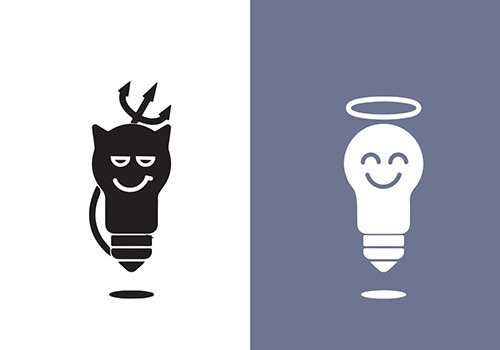
You see things in categories of black and white. If your performance falls short of perfect, you see yourself and your performance as a total failure.
You may tend to see everything in white or black, extreme opposites. Grey shades do not exist in the all–or–nothing way of thinking. This is the inclination to place things under extreme categories. If you cannot be 100 percent successful, it means that you are one hundred percent a failure. If you cannot absolutely be brilliant, it means that you are completely stupid. If a relationship is not absolutely perfect, it is a disaster. It is either white or black, right, or wrong, with nothing in between.
Friendly warning: surely most things should have shades of gray
Overgeneralisation
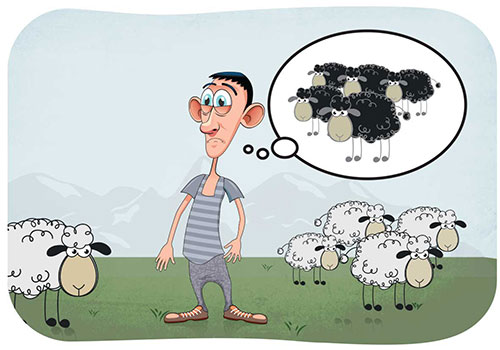
You just happen to see a single negative event as a never-ending pattern of defeat. You come to the conclusion that a single negative event is a prediction of a series of unhappy events that simply must follow. A single negative event messes you up, making you feel negative about everything and everyone for that day or period. You thus generalise the negative.
You come to the conclusion that a single negative event is a prediction of a series of unhappy events that simply must follow.
A typical example of overgeneralisation: a man hurt me emotionally, therefore all men hurt.
Friendly thought: nothing is ever just negative or bad.
Mental filter – disqualifying the positive
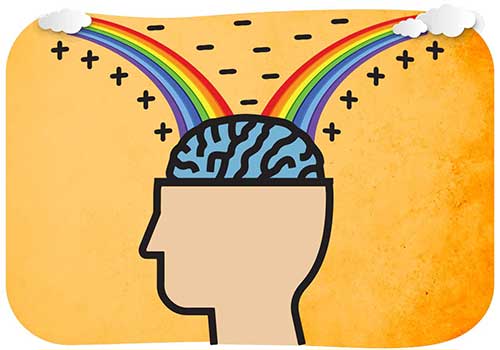
With this way of thinking positive traits and occurrences are diminished and ignored as if they do not exist or are seen as unimportant and insignificant.
Here you might want to choose a single negative element and colour the whole picture with negativity. A thoughtless comment from someone makes you think the whole world is cruel and hard, against you, and things begin to appear only negative.
Enlarging your mistakes and minimising your good traits will lead to a sense of inferiority complex, and you will even see positive aspects as negative, thinking the problem lies within you as a person.
Friendly insight: look very closely at the overall picture, the bigger picture, you may just find something positive in every situation. After all, every dark cloud has a silver lining.
Mind reading (jumping to conclusions I)
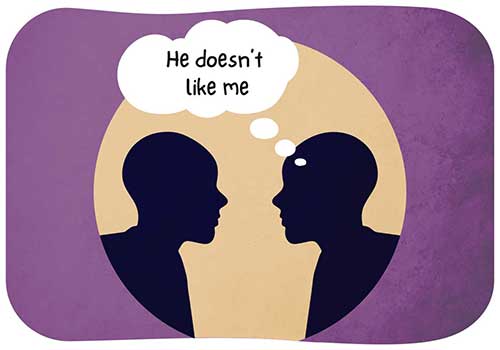
You believe that you can read the minds of other people, and know beforehand what they think of you, and it is always negative. You are so convinced of this that you don’t even try to find out whether it is true or not, e.g., looking at the expression on her face, I can tell that she does not like me.
Friendly advice: Can you really read others’ minds, since no one else can?
Fortune telling mistake (jumping to conclusions II)
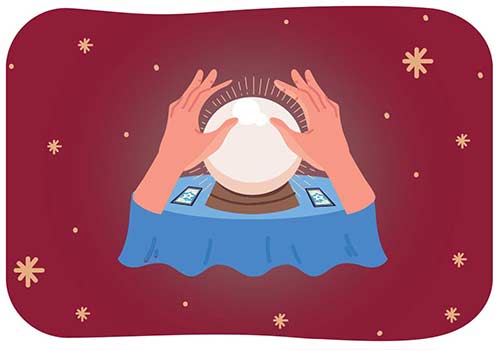
As if you have a crystal ball in front of you, and can see the future in it, all you see is doom and gloom. You believe you know reasons beforehand that something negative is going to happen in the future, and that means that you firmly believe that that is exactly what is going to happen.
Friendly reminder: fortune may also have a positive meaning or connotation…
Catastrophising

Any mistakes, fears, and failures are blown out of proportion and enlarged as if it is the biggest catastrophe ever. As if the future of mankind depends on you. If you don’t manage to connect the right wires, the world will come to an end.
Friendly thought: nothing is ever that terrible. Throughout your journey, you’ve consistently overcome and survived challenges and you’ll survive this one too.
Emotional reasoning

You regard your negative emotions as a guarantee for the truth and reality of a matter. Because you feel this way, therefore this feeling you’re having is the reality. As an example: I feel like a zero, therefore I am a zero, whether you had a reality check or not.
Friendly reality check: Don’t believe everything you feel. Your feelings may be deceiving.
Musts

This irrational thought consists of expectations and requirements, which you set for yourself and the world.
You use words like: must, should, ought, or must not, should not, or ought not. I must or must not do this or that. This should have or should not have happened. All these musts lead to guilt feelings, rage, frustration, or bitterness toward others.
Friendly affirmation: there is nothing on earth that must or must not happen, be or not exist (except for dying, load shedding, and paying taxes)
Labelling
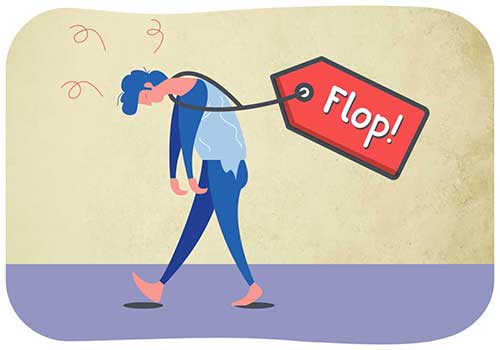
Labelling entails burdening yourself or others with negative judgements, allowing these judgements to define and, or limit your identity or the identity of others.
It is an extreme form of overgeneralisation. Normally, labelling begins with the words is, are, or am. I have not made a mistake – I am a mistake. He is a real donkey, instead of: he did a donkeyish thing.
You are not what you are doing right or wrong. Labelling is inaccurate, misleading, emotionally charged, and usually leads to hostility and bitterness.
Friendly idea: you are not what you are doing right or wrong. Making a mistake does not mean that you are a mistake. Focus on the challenge, rather than on the person.
Personalisation
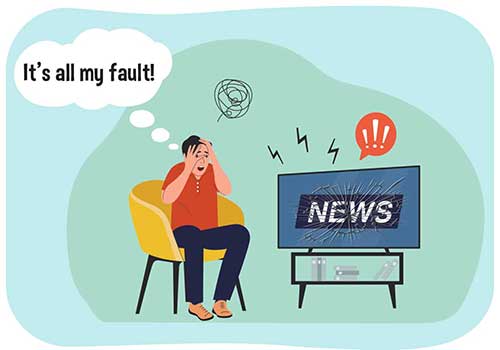
Personalisation refers to the act of assuming responsibility for a negative event, even in the absence of evidence to prove it as your fault. It involves a mindset where the other party is always perceived as right, and as a result, you consider yourself always in the wrong.
Friendly hint: you are not alone responsible for everything that goes wrong between you and other people. You don’t always have to put on the shoe that doesn’t fit.
Enlargement or reduction

This is also called the binocular-trick. This irrational thought means that you may blow up events out of proportion and make them worse than they really are (just as you would if you were using binoculars to enlarge or reduce an image you are looking at).
Friendly suggestion: it might be useful to get rid of your binoculars. A moles heap may not have to be Mount Everest, but indeed just a moles heap!
Low frustration tolerance
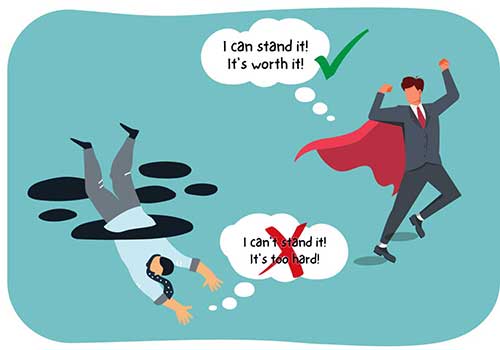
This means that you feel that you cannot endure or take something any longer and that it is unbearable, just too much for you to handle.
People tend to lose sight of possible advantages if they can’t keep calm for a little while. This irrational thought develops when your levels of frustration or stress get too high.
Friendly idea: This is not an endless pit, this too shall pass.
Who may experience these irrational thoughts?
Anyone can experience irrational thoughts, and most of us do from time to time. This is especially true for people who are prone to worrying, overthinking, and stress. Certain mental health conditions, such as those that cause paranoia or obsessive behaviour, can cause irrational thoughts as well.
If you have any of the following mental health conditions, you may be more prone to experience irrational thoughts:
- anxiety,
- depression,
- panic,
- phobias,
- stress,
- bulimia,
- obsessive compulsive disorder,
- post-traumatic stress disorder,
- bipolar disorder,
- lack of motivation,
- self-esteem issues,
- psychosis,
- substance abuse;
- difficulties with anger,
- physical health problems, like pain or fatigue.
Therapy
Cognitive Behavioural Therapy (CBT) confronts these distorted ways of thinking and helps you develop healthier ways of interpreting events in your life to help prevent catastrophising.
Changing your thoughts and feelings is the core of CBT. If you change your thoughts, you may change your feelings and consequently your response.
I don’t believe that a change in thoughts in your thinking brain (the neo-cortex) will be enough to change your feelings, as the CBT practitioners advocate and get great success with. I believe that using the wisdom of the neo-cortex together with the power of the reptile brain will bring about the change we want and need.
In order to change your thinking, it’s helpful to first become aware of these thought patterns. Once you understand the way you think, you can learn to address and reframe your thoughts.
What is CBT?
Cognitive Behavioural Therapy (CBT) is a psychotherapeutic model emphasising the fact of how you are thinking about yourself, the world, and other people and how you can change your way of thinking to get a different outcome.
CBT can help you to change how you think (Cognitively) and how you respond (Behavioural). These changes can help you feel, unlike some of the other talking treatments. CBT focuses on the here-and-now challenges and difficulties. Instead of focusing on the causes of your distress or symptoms in the past, it looks for ways to improve your state of mind in the now.
How does it work?
CBT can help you make sense of overwhelming challenges by breaking them down into smaller, manageable parts. This makes it easier for you to see how they are connected and how they affect you.
CBT in my practice
I’m not particularly excited about CBT. CBT is great for helping people to think differently, but the solution to your challenge isn’t necessarily located in your neo-cortex, the thinking part of your brain.
CBT can be helpful if it causes you to think differently about a challenge in your thinking brain (your neo-cortex.) The challenge, however, is still nestled in your reptilian brain that doesn’t respond to thinking, whether your thinking is rational or irrational.
CBT and hypnosis
CBT is a model that deals with the fact that when you think differently, you will feel differently.
Hypnosis, on the other hand, argues that when you feel differently, you will think differently!
After all, it only makes sense that we use the logic of our conscious together with the power of our subconscious mind to change our thoughts, feelings, and actions.
The three magic questions
These three magical questions may help you get over all your challenges, if you ask yourself, consciously and subconsciously:
- What is the worst that can happen?
- If it does happen, how bad will it really be?
- What are the chances that it will actually happen, since most of the things we fear never happen anyway?